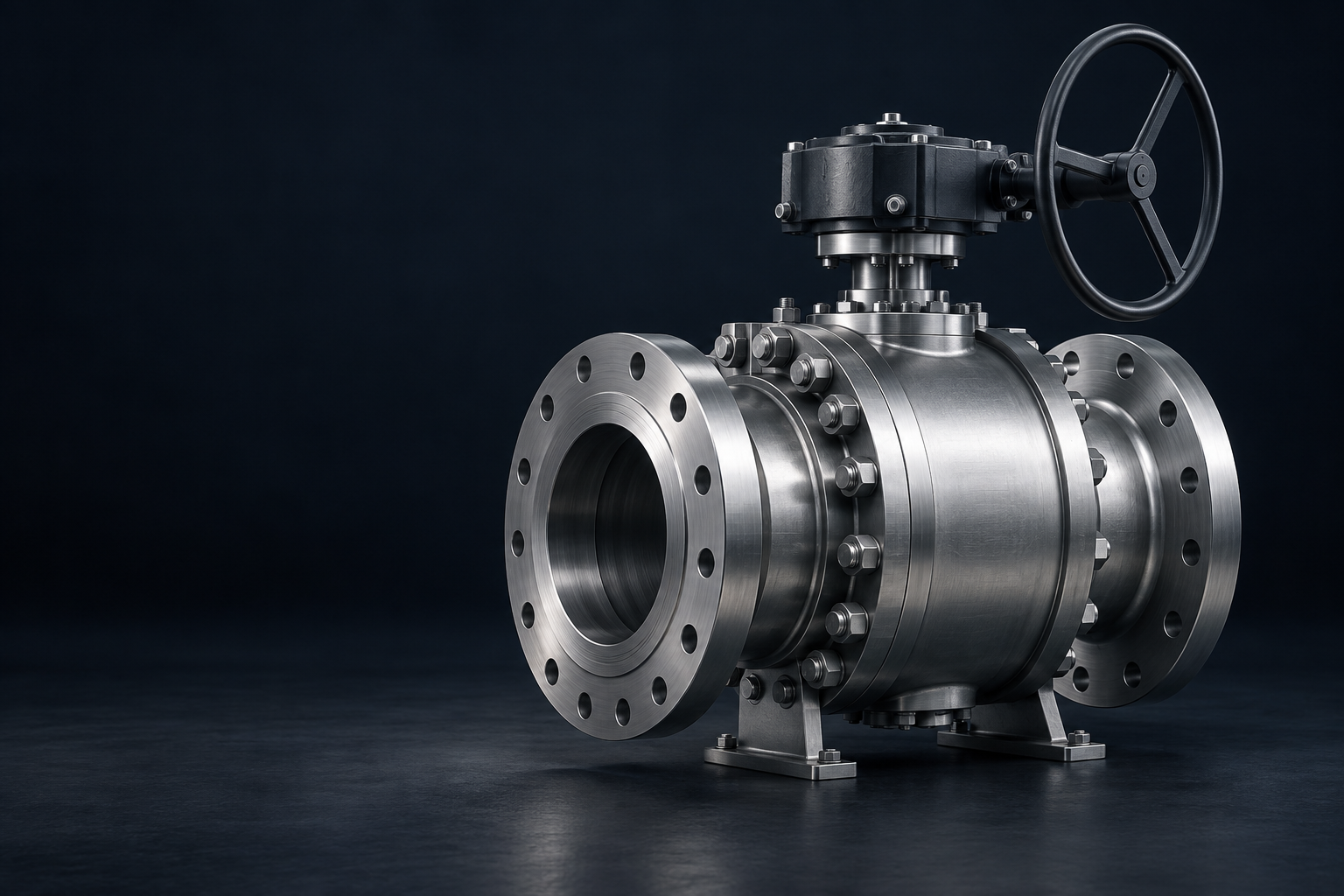
Built for pressure.
Engineered for
your process.
Industrial valve solutions for demanding applications.
Connect your specifications to the right valve.
The right valve. For every critical point.
Explore valve families built around your isolation and flow control requirements.
Where performance is essential.
Start with your industry. Specify for your actual operating conditions.
Oil & Gas
Isolation solutions from upstream facilities to downstream processing.
02Petrochemical
Valve selection for complex process streams and continuous operations.
03Chemical Processing
Material-led selection for aggressive and demanding media.
04Power Generation
Flow control for steam, cooling water and auxiliary systems.
05Water Treatment
Practical isolation and flow management for water infrastructure.
06Mining
Selection support for abrasive media and challenging plant environments.
A specification-first
approach to every project.
From the first datasheet to the final documentation package, a better supply decision starts with the right questions.
Get to know Vanta ValveApplication-led selection
Materials, seats and actuation considered together.
Manufacturing review
Define the production scope and supplier evidence.
Quality requirements
Agree on inspection points and acceptance criteria.
Clear documentation
Align drawings, certificates and reports to the order.
Confidence starts
before production.
Define the materials, manufacturing scope and inspection requirements that your project needs.
- Material and traceability requirements
- Machining and dimensional inspection scope
- Pressure testing and documentation plan
Your requirements.
Clearly defined.
Specify applicable design standards in your RFQ. Applicability and compliance require confirmation for each configuration. These references are not certification claims.
Review certification informationDemanding duty. A considered solution.
High Pressure Valves
Start with design pressure, temperature and the applicable piping code.
02High Temperature Valves
Consider material limits, thermal expansion and sealing performance together.
03Cryogenic Valves
Define low-temperature service requirements before selecting the valve.
04Corrosion Resistant Valves
Match wetted materials to the actual process chemistry.
05Severe Service Valves
Review the combined effects of pressure, temperature, erosion and cycling.
Trunnion mounted.
Application focused.
Explore configuration options, design features and the technical information required for your next enquiry.
Explore the productBetter information. Better decisions.
Valve Selection Guide
The information that turns a valve enquiry into an actionable specification.
Read the guideBall valve vs. gate valve
Ball valve vs. gate valve: compare the duty, operating method and installation.
Read the guideEngineering Guides
A practical checklist for reviewing a valve quotation and datasheet.
Read the guideA clearer path to your next purchase.
Valve documentation: what to request before ordering
Understand the different roles of product drawings, material records, test reports and company certificates in a valve purchase.
How to compare industrial valve quotations
Look beyond the unit price. Compare technical deviations, testing, documentation and delivery scope before selecting a valve supplier.
What to include in an industrial valve RFQ
A practical checklist for procurement teams: service conditions, valve specifications, documentation and the details that make quotations comparable.
A few useful answers.
Start with the details that matter to your purchase.
View all FAQsHow do I choose the right valve family?
Start with the duty: isolation, flow control, non-return protection or flow diversion. Then define the medium, operating envelope, piping requirements and actuation. The final configuration needs a project-specific review.
What should I include in a valve RFQ?
Provide the valve type, size, pressure class, materials, medium, operating and design temperatures, quantity and applicable standards. Include end connections, actuation, drawings and delivery requirements where available.
Does a listed API or ASME standard mean the company is certified?
No. A design-standard reference and a company certification are different types of information. Confirm product compliance for the proposed configuration and verify any required certificate separately.
Your application.
Our next conversation.
Share your operating conditions, specifications and project requirements.