Check Valve Cracking Pressure: Opening, Resealing and Flow Capacity
Engineering resources
Check Valve Cracking Pressure: Opening, Resealing and Flow Capacity
Cracking pressure is the pressure difference associated with the first indication of flow through a check valve under the manufacturer's stated test conditions.
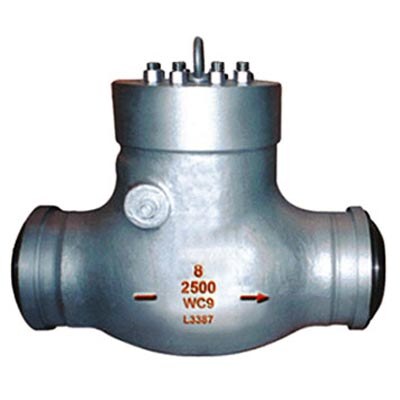
Cracking pressure is the pressure difference associated with the first indication of flow through a check valve under the manufacturer’s stated test conditions. It identifies the beginning of opening, not the point at which the valve is fully open or delivering its rated capacity.
This distinction matters in low-pressure systems. A valve may begin to open at the specified cracking condition yet require additional differential pressure to deliver the required operating flow. Selecting only by the nominal cracking value can therefore leave the flow requirement unresolved.
What opposes opening
A check valve’s moving element responds to fluid forces and the closing forces of its design. In a spring-loaded valve, the spring contributes to the resistance that must be overcome. Gravity and installation orientation can also matter in applicable mechanisms. Seal contact and the condition of the valve may affect initial behaviour.
Swagelok distinguishes cracking, resealing and back pressure in its check-valve catalogue and gives model-specific ranges. It also notes that initial cracking pressure after a period without actuation can be higher than the set value. These details are reasons to use the actual model’s data instead of treating a nominal number as an exact switching threshold. Swagelok catalogue.
Cracking pressure is not pressure drop at working flow
Once the valve begins opening, its moving element and flow passage continue to respond as flow increases. The differential needed at the required flow comes from the applicable flow data, not just the opening threshold. Request the flow curve or other manufacturer information for the intended fluid and operating range.
For an illustrative enquiry, suppose a process has only a small pressure difference available between two vessels. The buyer should provide both vessel pressures across the operating cycle and the required transfer flow. A low nominal cracking value alone does not establish that the transfer can occur at the desired rate.
Resealing is a separate condition
Reseal pressure describes the condition at which flow is no longer indicated under the specified test. It need not equal the opening condition. Some designs and spring selections have specific back-pressure requirements for resealing. Use the manufacturer’s stated direction, test method and acceptance criteria when interpreting the value.
This prevents a common error: assuming that a valve which starts opening at a particular differential must close tightly at exactly the same number on the return cycle. Opening and resealing behaviour are separate pieces of information.
| Data item | What it answers |
|---|---|
| Nominal cracking pressure and tolerance | When opening begins under the stated conditions |
| Reseal condition | When the specified indication of flow ceases |
| Flow curve | Differential needed at an operating flow |
| Maximum pressure-temperature limits | Permitted service envelope of the assembly |
| Installation restrictions | Whether the stated behaviour applies in the intended orientation |
Choose the spring with the system in mind
A higher cracking setting may resist opening under a small unwanted forward differential, but it also consumes more of the available pressure budget. A lower setting may help an intended low-differential flow, while still requiring verification of resealing and stable operation. Neither is universally better.
Provide the minimum, normal and maximum forward flow conditions, potential reverse differential, fluid properties, temperature and orientation. If leak tightness is important, state the actual acceptance requirement and test medium rather than using “no leakage” without a defined basis.
Keep isolation and transient protection separate
A check valve is not automatically an approved maintenance isolation or a complete solution to water hammer. Reverse-flow prevention, safe isolation and system transient control are different requirements. A change to spring setting should be reviewed for its effect on the whole operating cycle.
Is cracking pressure the maximum working pressure? No. One describes opening behaviour; the other concerns the allowed service envelope.
Can nominally identical valves open at slightly different values? The applicable tolerance, test conditions and valve condition determine the permitted variation.
Review the check valve family and request opening, resealing and flow information together. That gives a meaningful basis for selection beyond a single catalogue number.
Let’s specify the right valve.
Send your valve list, operating conditions or project datasheet.
Need a valve for your application?
Send your valve type, operating conditions and quantity. Our team can help review the options for your inquiry.
Request a Quote →